

Measurements play an important role in many everyday tasks, from furniture placement to shipping and storage planning. One measurement format that often appears in product specifications or packaging details is 41x72x43. At first glance, it may look confusing, but it actually follows a simple dimensional structure used across many industries.
Understanding how 41x72x43 works can help you interpret product sizes, plan space more effectively, and avoid mistakes when ordering or transporting items. In this guide, we will explore what this measurement means, where it is used, and why it matters in real-life situations.
Understanding the Meaning of 41x72x43
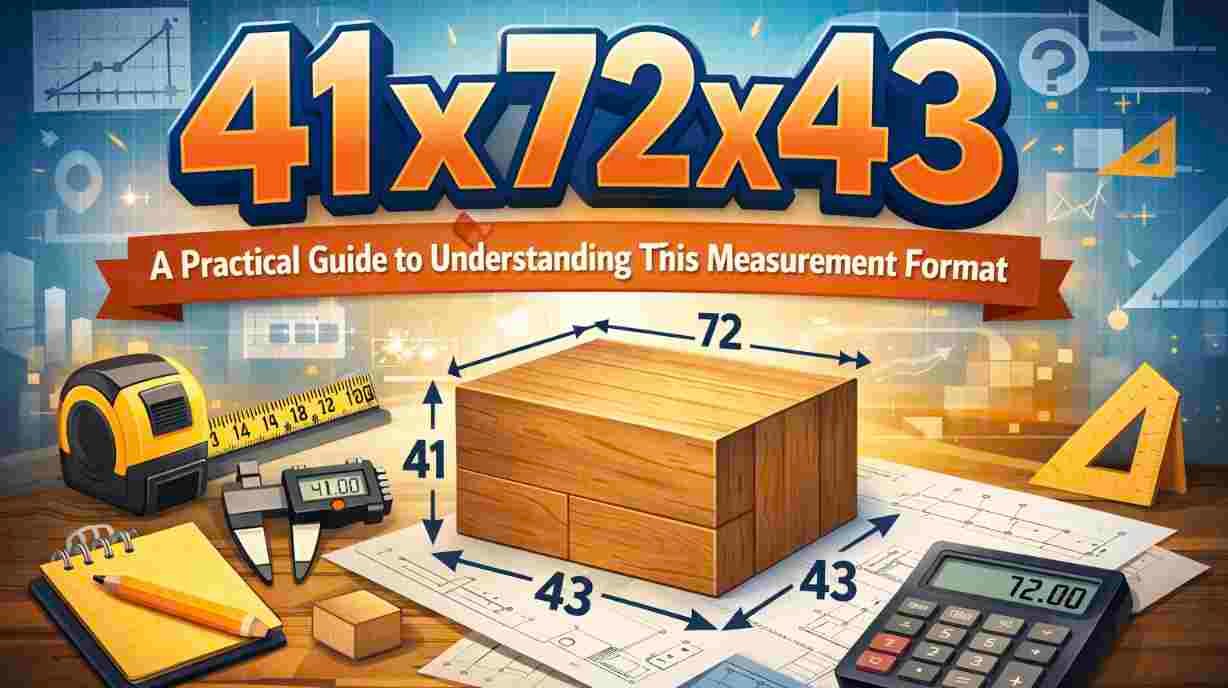
The format 41x72x43 represents three dimensions of an object. These values typically correspond to length, width, and height. The order may vary depending on the manufacturer or industry, but the concept remains the same.
For example, if the numbers represent inches, the object would measure:
- 41 inches in length
- 72 inches in width
- 43 inches in height
This type of dimensional measurement format is widely used in product specifications, logistics documentation, and storage planning.
H3: Why Dimension Formats Matter
Dimension formats help provide a clear description of an object’s physical size. Without standardized measurements, it would be difficult to determine whether an item fits in a particular space, vehicle, or storage unit.
Clear measurements also improve communication between manufacturers, retailers, and consumers.
Common Uses of 41x72x43 Measurements
Measurements like 41x72x43 frequently appear in multiple industries. These numbers can represent the size of equipment, packaging boxes, furniture pieces, or storage containers.
In the furniture industry, dimensions help customers determine whether a sofa, cabinet, or shelf will fit into a room. In logistics and shipping, dimensional measurements help calculate shipping costs and determine container compatibility.
Some common use cases include:
- Warehouse storage units
- Furniture product specifications
- Industrial equipment dimensions
- Packaging and shipping boxes
- Transportation planning
By understanding these dimensions, businesses and individuals can plan more efficiently.
How to Visualize 41x72x43 Dimensions
Many people find it difficult to imagine measurements just by reading numbers. Visualizing the dimensions of 41x72x43 can help make better decisions when purchasing or planning space.
One effective approach is to compare the dimensions with familiar objects or use measuring tape to mark the length, width, and height on the floor or wall.
H3: Practical Visualization Tips
To visualize dimensions more easily:
- Use measuring tape to outline the area.
- Mark the corners with tape or small objects.
- Compare with existing furniture or storage items.
These simple techniques make it easier to understand how much space the object will occupy.
Why Accurate Dimensions Are Important
Accurate measurement details are essential in modern commerce. Incorrect dimensions can cause delivery problems, storage issues, or installation difficulties.
For example, if an item listed as 41x72x43 is measured incorrectly, it may not fit through doors, hallways, or elevators. This can lead to delays, extra costs, or product returns.
Businesses rely heavily on precise measurements to ensure efficient shipping, packaging optimization, and warehouse management.
Accurate dimensions also help with:
- Space optimization
- Inventory management
- Product compatibility
- Shipping calculations
When measurements are clearly defined, customers and companies can avoid unnecessary complications.
Industries That Use Dimensional Formats Like 41x72x43
Dimension formats such as 41x72x43 are used across a wide range of industries. These industries depend on precise measurements to maintain efficiency and accuracy.
Manufacturing companies use dimensional data to design products and create production plans. Logistics companies use measurements to determine packaging sizes and calculate dimensional weight for shipping.
Retailers and e-commerce platforms also rely on product dimensions to help customers make informed purchasing decisions.
Other industries that frequently use dimensional specifications include:
- Construction and architecture
- Interior design and furniture manufacturing
- Transportation and freight logistics
- Warehousing and supply chain management
These sectors rely on dimensional data to maintain operational accuracy and ensure products reach customers without issues.
FAQ Section
Q. What does 41x72x43 mean?
- It refers to three measurements of an object, typically length, width, and height. These numbers describe the physical size of the item.
Q. What units are used in 41x72x43?
- The units depend on the context. They are often inches, centimeters, or millimeters depending on the product or industry.
Q. Why are dimensions written in this format?
- This format provides a quick and standardized way to describe the size of an object in three dimensions.
Q. Where are dimension formats commonly used?
- They are commonly used in furniture specifications, shipping boxes, industrial equipment descriptions, and warehouse storage planning.
Q. How can I measure an object correctly?
- Use a measuring tape to record length, width, and height. Always measure from the longest points to ensure accuracy.
Conclusion:
Understanding dimensional formats like 41x72x43 is essential for interpreting product specifications, planning storage space, and managing logistics efficiently. While the numbers may initially appear confusing, they simply represent the length, width, and height of an object.
These measurements are widely used in industries such as manufacturing, furniture design, shipping, and warehousing. Accurate dimensions allow businesses to optimize storage, calculate shipping costs, and ensure products fit properly within designated spaces.
For consumers, knowing how to interpret dimensional measurements can make purchasing decisions easier and reduce the chances of ordering items that do not fit the intended space. By learning how measurement formats work, anyone can better understand product specifications and make smarter choices when dealing with physical dimensions.