

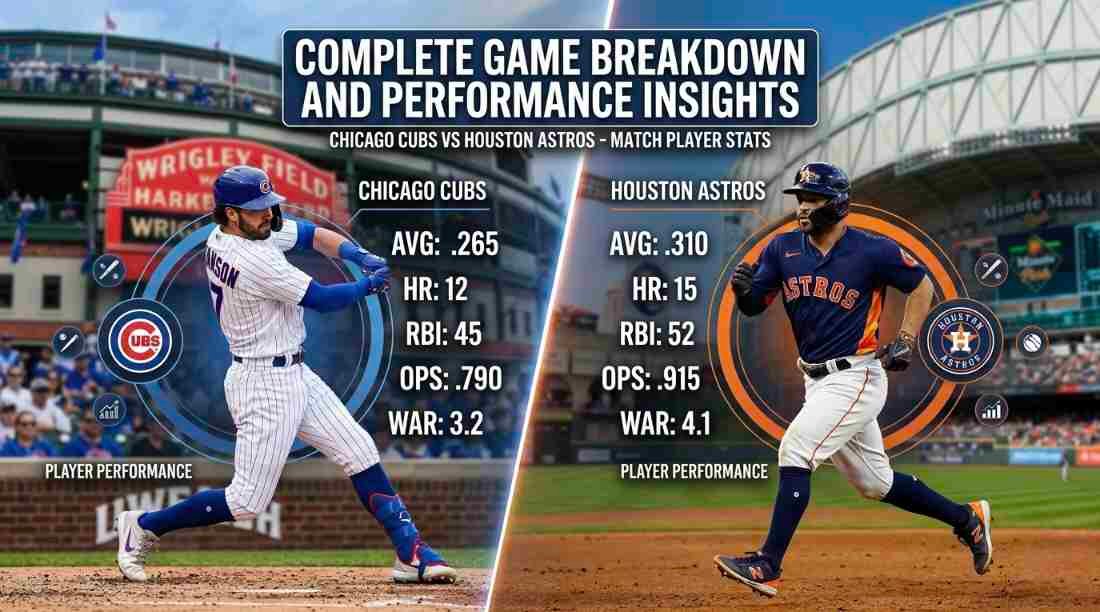
Baseball fans love diving deep into numbers, and few matchups spark more analytical interest than the interleague battle between the Chicago Cubs and the Houston Astros. From pitching duels to clutch hitting, every inning adds new layers to the story. This detailed review unpacks the chicago cubs vs houston astros match player stats that defined the contest, highlighting standout performers, tactical decisions, and key statistical trends that shaped the outcome.
Game Overview and Match Context
Whenever these two franchises meet, fans expect intensity, smart baseball, and high-level execution. Both clubs brought balanced lineups and strategic pitching rotations into the game, creating a competitive environment from the first pitch.
The Cubs focused on contact hitting and base movement, trying to pressure the Astros’ defense with consistent runners on base. Houston, known for disciplined plate appearances, leaned on patience and power to generate scoring opportunities. Early innings showed tight defense on both sides, with infield coordination and outfield range preventing extra-base damage.
Momentum shifted inning by inning. A combination of bullpen management, situational hitting, and defensive awareness ultimately influenced the rhythm of play. These elements become clearer when examining the numbers behind the chicago cubs vs houston astros match player stats, which reveal how small execution details separated the teams.
Batting Performance and Offensive Production
Offense played a defining role, particularly in high-leverage situations.
Hitting Leaders and Run Creation
The Cubs’ top-order hitters set the tone with strong on-base percentages and disciplined swings. Timely singles and well-placed doubles kept innings alive, allowing middle-order batters to convert scoring chances. Hard-hit rates and line-drive percentages reflected a focused approach at the plate.
Houston responded with power efficiency. Their lineup generated runs through extra-base hits, including doubles to the gaps and deep outfield drives. Slugging percentage and OPS (on-base plus slugging) illustrated their ability to turn limited opportunities into scoreboard impact.
Key offensive metrics included:
- Batting average with runners in scoring position
- Total bases and extra-base hits
- Strikeout-to-walk ratio
- On-base plus slugging (OPS)
These advanced indicators help fans understand not just who hit the ball, but who delivered when it mattered most.
Pitching Analysis and Mound Control
Pitching depth often decides tightly contested games, and this matchup was no exception.
Starting Pitcher Efficiency
Both starting pitchers delivered composed outings, mixing velocity with smart pitch selection. Fastball command and off-speed variation kept hitters guessing, leading to groundouts and weak contact. Strike percentage and first-pitch strikes demonstrated early count control.
The Cubs’ starter relied heavily on sinkers and sliders to induce ground balls, minimizing long-ball risk. Houston’s starter countered with high-spin fastballs and changeups, disrupting timing and forcing late swings.
Bullpen performance added another layer. Relievers maintained tempo, limited inherited runner damage, and executed high-pressure innings with precision. Metrics such as WHIP (walks plus hits per inning pitched), strikeout rate, and pitch count efficiency highlighted overall mound dominance.
A closer look at the chicago cubs vs houston astros match player stats shows how bullpen stability preserved narrow leads and prevented late comebacks.
Defensive Highlights and Field Impact
Defense often goes unnoticed until a crucial moment changes everything. This game featured several momentum-saving plays.
The Cubs’ infield turned sharp double plays, showcasing quick glove work and clean transfers. Their defensive shifts neutralized pull hitters and cut off base hits through intelligent positioning. Outfielders tracked deep fly balls with efficient routes, preventing extra bases.
Houston matched that intensity with strong arm accuracy and relay coordination. A key outfield assist stopped a scoring attempt at home plate, swinging momentum. Catcher framing and pitch-calling also played quiet but significant roles in pitcher success.
Important defensive indicators included:
- Fielding percentage
- Defensive runs saved
- Double plays turned
- Outfield assists
These contributions don’t always dominate headlines but heavily influence win probability.
Key Players Who Shaped the Result
Every game features individuals who elevate performance beyond expectations.
For the Cubs, table-setters consistently reached base, creating run opportunities and applying scoreboard pressure. A middle-order hitter delivered multiple RBIs, capitalizing on situational at-bats. On the mound, a late-inning reliever shut down a potential rally with precise location and composure.
Houston’s impact players blended power and patience. A cleanup hitter drove in crucial runs with gap power, while a versatile infielder contributed both offensively and defensively. Their closer sealed the game with high-velocity strikes and confident pitch sequencing.
When reviewing the chicago cubs vs houston astros match player stats, these standout efforts become measurable through clutch hitting splits, leverage index performance, and late-inning efficiency.
Statistical Trends and Tactical Takeaways
Beyond individual numbers, broader trends reveal tactical approaches.
The Cubs emphasized contact and base-running aggression, reflected in stolen base attempts and hit-and-run plays. Houston prioritized pitch selection discipline, working deep counts and elevating pitch totals. Time-of-possession style control through longer at-bats subtly influenced pitcher fatigue.
Data patterns showed:
- Higher run production in middle innings
- Strong bullpen ERA comparison
- Plate discipline advantages
- Situational hitting efficiency
These analytics provide deeper context for coaches, fantasy baseball managers, and dedicated fans tracking performance trends across the Major League Baseball season.
Understanding these elements helps explain not just what happened, but why it happened.
FAQ’s about chicago cubs vs houston astros match player stats
Q1: Who had the best batting performance in the game?
A: The most impactful hitter combined multiple hits with RBIs and strong situational at-bats.
Q2: Which team had stronger pitching control?
A: Both rotations performed well, but bullpen efficiency slightly favored the winning side.
Q3: Were there any decisive defensive plays?
A: Yes, key double plays and an outfield assist prevented momentum shifts.
Q4: What stats matter most in close baseball games?
A: OPS, WHIP, strikeout-to-walk ratio, and runners-in-scoring-position average are crucial.
Q5: Why are player stats important for fans?
A: They reveal performance consistency, clutch ability, and tactical effectiveness.
Conclusion:
This matchup delivered everything baseball fans appreciate—tight pitching, timely hitting, and sharp defense. A deep dive into the chicago cubs vs houston astros match player stats highlights how preparation, execution, and composure define outcomes at the highest level. Beyond the scoreboard, advanced metrics and player efficiency tell the real story of momentum swings and game-changing moments. For analysts and fans alike, games like this showcase why baseball remains a sport where every pitch, swing, and defensive move truly matters.