

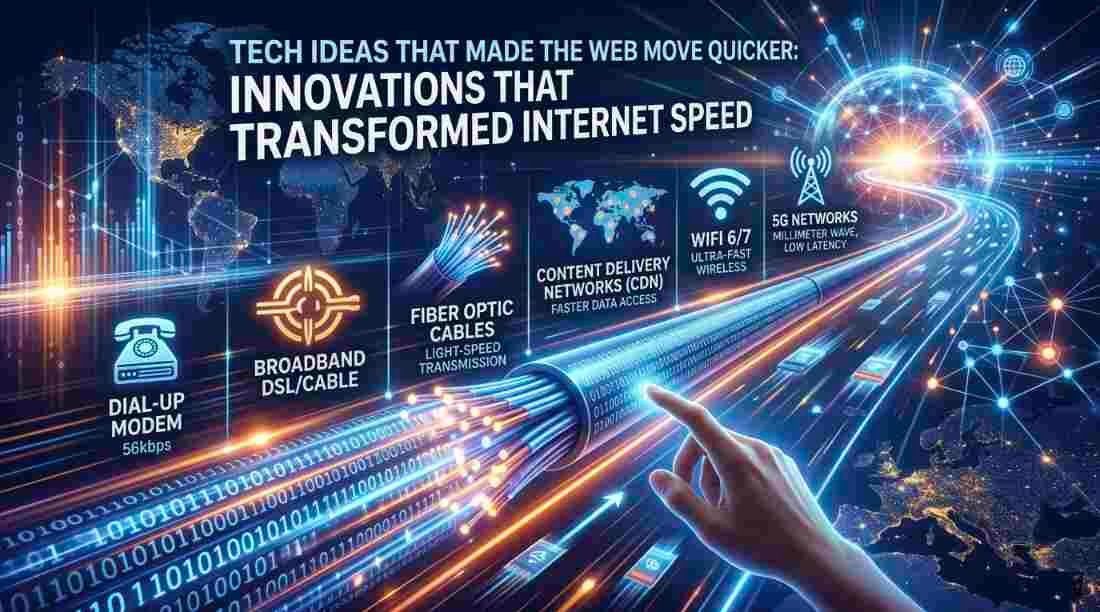
The internet we use today feels almost instant. Pages load in seconds, videos stream in high definition, and cloud apps run smoothly even on mobile devices. This speed didn’t happen by accident. It’s the result of several breakthrough innovations that quietly changed how data moves across the world. These tech ideas that made the web move quicker reshaped user experience, improved performance, and enabled the modern digital economy. From smarter data delivery systems to faster network protocols, each advancement solved a key bottleneck that once slowed the online world.
The Rise of Content Delivery Networks (CDNs)
One of the biggest speed revolutions came from content delivery networks. A CDN stores website data on multiple servers located around the globe instead of relying on a single origin server. When a user visits a site, content is delivered from the nearest server, reducing latency and load time.
This approach dramatically improved website performance, especially for global audiences. Businesses no longer needed massive infrastructure in every region. Instead, distributed edge servers handled traffic efficiently.
How CDNs Reduce Latency
Latency is the delay between a request and a response. CDNs reduce this delay by shortening the physical distance data must travel. Caching static files like images, scripts, and videos at edge locations ensures faster access and smoother browsing.
Today, CDNs are essential for streaming platforms, ecommerce stores, gaming services, and high-traffic blogs. Without them, modern web performance would feel sluggish and inconsistent.
Modern Web Protocols That Boost Data Transfer
Older internet protocols were not designed for today’s heavy data demands. As websites became richer with multimedia and interactive features, new communication standards emerged to optimize data exchange.
HTTP/2 introduced multiplexing, allowing multiple requests to travel over a single connection. This eliminated the need for repeated handshakes and significantly reduced load times. Later, HTTP/3 improved speed further by using a faster transport layer that minimizes connection delays.
These protocol upgrades are among the core tech ideas that made the web move quicker, enabling real-time applications like video conferencing, cloud collaboration tools, and live streaming.
Smarter Data Compression Techniques
Data compression reduces file sizes without heavily affecting quality. Smaller files travel faster across networks, improving both desktop and mobile performance.
Image formats evolved from bulky legacy types to highly efficient next-generation formats. Video compression also advanced, making high-resolution streaming possible even on average internet connections. Text-based resources like HTML, CSS, and JavaScript are now compressed automatically before transmission.
Compression not only speeds up page loading but also reduces bandwidth usage, making the web more accessible in regions with slower connections. It’s a silent efficiency booster that users rarely notice but benefit from every day.
Browser Caching and Local Storage Improvements
Web browsers became smarter about saving data locally. Instead of downloading the same files every time a user visits a site, browsers store frequently used resources on the device.
Caching minimizes repeated server requests and accelerates return visits. Local storage systems also allow web apps to function smoothly by saving user preferences, session data, and offline resources.
This technology made web applications feel closer to native apps in responsiveness and reliability. Faster reloads, smoother navigation, and offline capabilities all stem from better client-side storage strategies.
The Shift Toward Lightweight Web Design
Heavy websites filled with large media files and complex scripts used to slow everything down. Developers began adopting performance-first design principles to solve this issue.
Minimalist interfaces, optimized code, and efficient frameworks reduced unnecessary data loads. Lazy loading ensured images and videos only load when needed. Mobile-first design improved performance on smartphones, where speed matters most.
Performance-Focused Development Practices
Developers now rely on techniques like code splitting, asynchronous loading, and script minification. These methods prevent browsers from being overloaded and keep user experience smooth.
Progressive web apps also emerged, combining the reach of websites with the speed of mobile applications. These approaches represent practical tech ideas that made the web move quicker by focusing on efficiency rather than visual excess.
Cloud Infrastructure and Edge Computing
Traditional hosting relied on centralized data centers, which often created traffic congestion. Cloud computing introduced scalable infrastructure that adjusts resources automatically based on demand.
Edge computing pushed processing power closer to users. Instead of sending every request to a distant data center, edge servers handle tasks locally, reducing delays.
This combination improved reliability, uptime, and responsiveness. It powers everything from smart devices to real-time analytics platforms. Businesses can now deliver faster digital services without massive hardware investments.
Scalable cloud systems remain one of the most impactful tech ideas that made the web move quicker, supporting modern platforms, SaaS tools, and global applications.
JavaScript Engine and Rendering Optimizations
Web browsers upgraded their internal engines to process code faster. JavaScript execution became more efficient, allowing complex web apps to run smoothly.
Rendering engines also improved how pages are displayed. Faster parsing, smarter memory management, and GPU acceleration reduced visual lag and improved interactivity.
These behind-the-scenes improvements made dynamic websites feel instant. Online editors, design tools, and interactive dashboards rely heavily on these performance upgrades.
FAQ’s about tech ideas that made the web move quicker
Q1. What makes the web faster today than before?
- Improved protocols, smarter hosting infrastructure, efficient compression, and optimized browser technologies all contribute to faster performance.
Q2. Do CDNs really improve website speed?
- Yes. They reduce latency by delivering content from servers closer to users.
Q3. How does compression help internet speed?
- Compressed files are smaller, so they transfer faster and use less bandwidth.
Q4. Why is mobile-first design important for speed?
- Mobile users often have slower connections, so lightweight design ensures faster loading and better usability.
Q5. Is cloud computing related to web performance?
- Yes. Cloud systems scale resources dynamically and reduce server overload, improving reliability and speed.
Conclusion:
The modern internet is built on continuous innovation. From distributed servers and advanced protocols to smarter browsers and efficient design strategies, each breakthrough removed a layer of delay. These improvements didn’t just enhance speed; they reshaped how people work, learn, shop, and connect online. The ongoing evolution of performance technologies ensures users enjoy seamless digital experiences across devices and regions. As new challenges emerge, future innovations will continue building on these foundations, proving that smart engineering keeps the web fast, reliable, and ready for what’s next.