

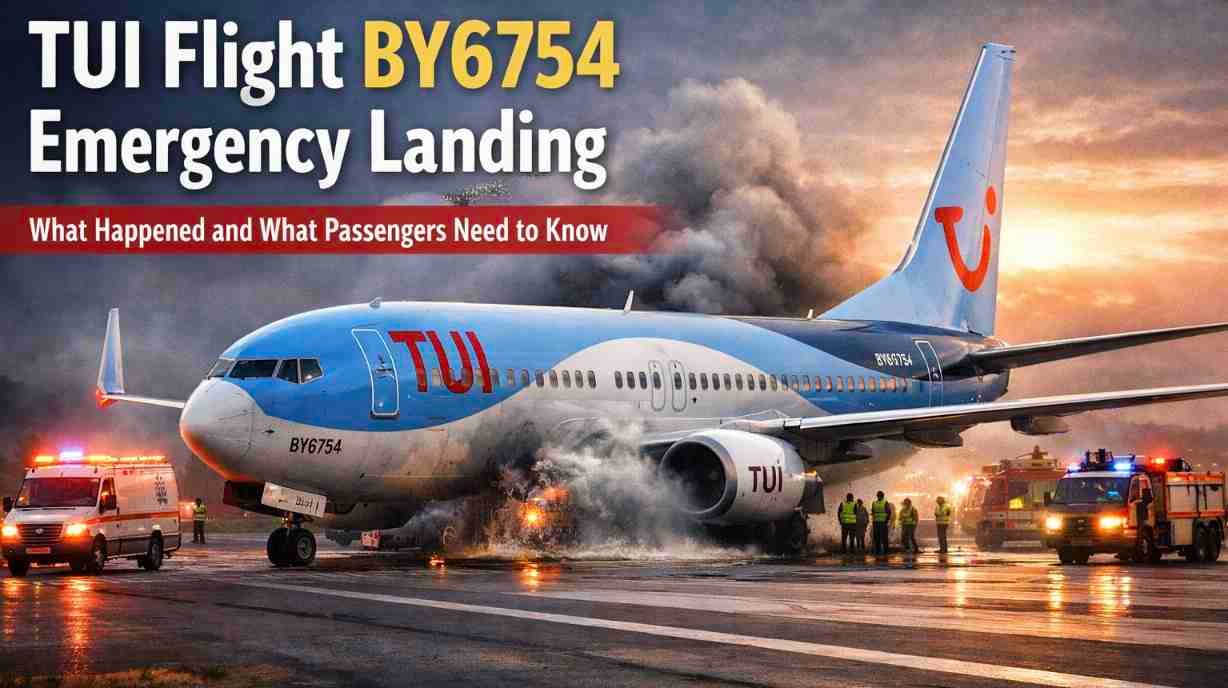
Air travel is statistically one of the safest modes of transportation, yet any unexpected incident naturally captures attention. The tui flight by6754 emergency landing has recently become a widely discussed aviation event, prompting questions about passenger safety, airline protocols, and in-flight emergency procedures.
While emergency landings sound alarming, they are often precautionary measures taken by pilots to ensure maximum safety. In this article, we explore what is known about the situation, how airlines respond to such events, and what it means for travelers.
Overview of the Incident
The tui flight by6754 emergency landing involved a commercial aircraft operated by TUI Airways, a well-known British airline serving leisure destinations across Europe and beyond. According to reports circulating in aviation news and passenger accounts, the flight declared an emergency mid-journey due to a suspected technical irregularity.
Modern aircraft are equipped with advanced diagnostic systems that continuously monitor engine performance, cabin pressure, hydraulic systems, and electrical components. When a potential issue is detected, the cockpit crew follows strict aviation safety protocols. In this case, the pilots opted for a precautionary landing at the nearest suitable airport.
Passengers described a calm but serious atmosphere on board. The flight crew reportedly kept travelers informed, reassuring them that emergency procedures were standard protocol and not necessarily an indication of imminent danger.
Possible Causes Behind Emergency Landings
Emergency landings can occur for several reasons. Though each case is unique, aviation experts often categorize such incidents under the following causes:
Mechanical or Technical Issues
Aircraft are complex machines, and even minor sensor alerts can trigger precautionary action. Possible triggers include:
- Engine performance warnings
- Hydraulic pressure fluctuations
- Electrical system irregularities
- Cabin pressurization alerts
In many cases, the issue turns out to be minor or quickly fixable once the aircraft is inspected on the ground.
Medical Emergencies Onboard
Sometimes flights are diverted due to a passenger’s sudden medical emergency. Pilots may request priority landing clearance to ensure immediate medical attention. Although not officially confirmed as the cause in every discussion around the tui flight by6754 emergency landing, medical diversions are among the most common reasons globally.
Weather and External Factors
Severe turbulence, bird strikes, lightning encounters, or unexpected weather shifts can also lead to unscheduled landings. Pilots are trained to assess risk instantly and choose the safest option.
How Airlines Handle Emergency Situations
Airlines like TUI Airways operate under strict guidelines set by aviation authorities such as the Civil Aviation Authority and the European Union Aviation Safety Agency. These regulatory bodies enforce compliance with international safety standards.
When an emergency is declared:
- Air traffic control provides priority routing.
- Emergency services prepare at the destination airport.
- Cabin crew initiate safety procedures if required.
- Maintenance teams inspect the aircraft immediately after landing.
The emphasis is always on precaution and passenger protection. It’s important to understand that declaring an emergency does not automatically mean the aircraft is in critical danger. Often, it is simply a proactive decision.
The aviation industry uses layered safety systems. From pilot simulator training to routine aircraft maintenance checks, risk mitigation is built into every stage of flight operations.
Passenger Experience and Safety Measures
For travelers, an emergency landing can feel stressful, even if handled smoothly. During the tui flight by6754 emergency landing, reports suggest that passengers remained seated while cabin crew delivered clear instructions.
Here’s what typically happens during such situations:
- Pilots communicate calmly via intercom.
- Cabin crew secure the cabin and check seat belts.
- Emergency vehicles may be visible upon landing.
- Disembarkation happens in an orderly manner.
Modern aircraft are designed with redundancy systems. For example, commercial jets often have multiple backup systems for engines, hydraulics, and avionics. This means a single warning does not automatically compromise overall flight safety.
Airlines also provide post-incident assistance, including rebooking, accommodation, or compensation when applicable. Passenger rights vary depending on departure and arrival regions, but customer support teams usually step in quickly after such events.
Impact on Airline Operations and Public Perception
The tui flight by6754 emergency landing sparked conversations online, with social media amplifying the news rapidly. In today’s digital world, even routine precautionary landings can appear dramatic when shared widely.
However, aviation analysts emphasize that emergency landings are part of normal airline operations. Thousands of flights operate daily, and precautionary diversions represent a tiny fraction of total journeys.
Airlines typically conduct internal investigations to determine the root cause. Transparency and clear communication help maintain public trust. In many cases, aircraft return to service shortly after inspection and necessary repairs.
From an operational standpoint, such incidents may cause temporary schedule disruptions, aircraft rotation changes, or flight delays. However, airlines have contingency planning systems designed to minimize passenger inconvenience.
The broader takeaway is that aviation safety culture encourages early intervention rather than risk-taking. Pilots are empowered to make conservative decisions without fear of penalty, reinforcing a “safety first” philosophy.
FAQs About Emergency Landings
What does it mean when a flight declares an emergency?
It means the pilots have informed air traffic control of a situation requiring priority handling. It does not always indicate severe danger.
Are emergency landings common?
They are uncommon but not rare. Most are precautionary and end without injury or major damage.
Was anyone injured during the tui flight by6754 emergency landing?
Publicly available information suggests that passengers disembarked safely, though official statements should be consulted for confirmation.
Do passengers get compensation after an emergency landing?
Compensation depends on the cause and regional aviation regulations. Airlines often provide rebooking and assistance.
Is flying still safe after such incidents?
Yes. Aviation remains one of the safest modes of transportation due to strict regulatory oversight and advanced safety technology.
Conclusion
The tui flight by6754 emergency landing serves as a reminder of how seriously the aviation industry treats safety. While the word “emergency” can sound alarming, it often reflects a cautious and responsible decision by experienced pilots.
With oversight from regulatory authorities, highly trained crews, and sophisticated aircraft systems, commercial aviation continues to prioritize passenger wellbeing above all else. For travelers, understanding how these procedures work can ease anxiety and reinforce confidence in air travel.
Ultimately, precaution is not a sign of failure — it is proof that aviation safety systems are working exactly as intended.